.png)
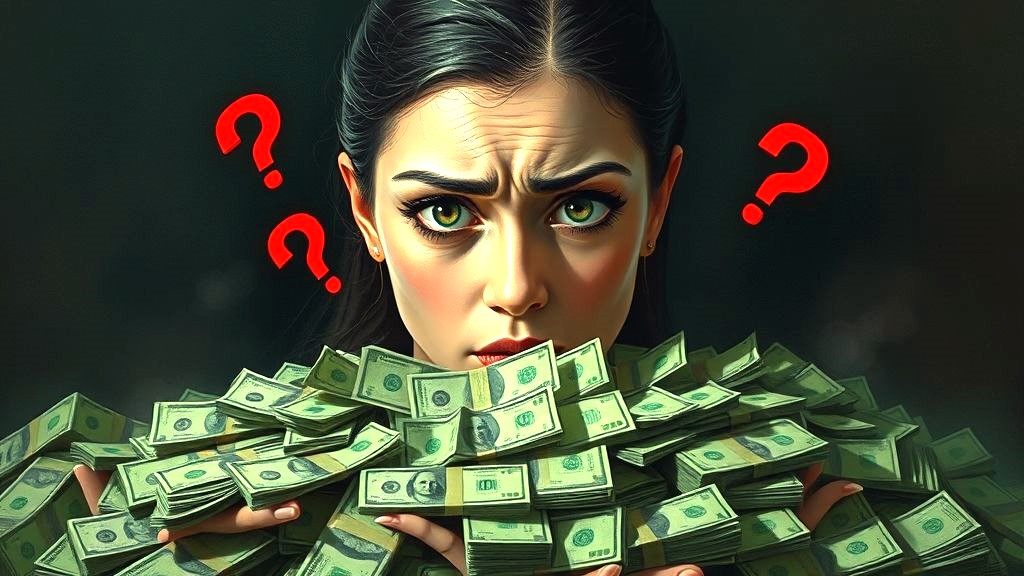
Our Emotions vs Investing
Remember that time you sold a stock in a panic, only to watch it soar a few weeks later?
Or how about chasing that 'guaranteed' tip from a friend, only to lose money?
We've all been there. It's not about being 'bad' with money; it's about being human.
"The market is a pendulum forever swinging between unwarranted optimism (which makes stocks too expensive) and unjustified pessimism (which makes them too cheap)."
- Benjamin Graham
Well, let's find out.
The Fear Factor
Imagine this: the market takes a sudden dip, news headlines scream 'CRASH!', and suddenly, you're hit with a wave of dread.
You see your portfolio shrinking, and the urge to sell becomes overwhelming. That's fear at work.
I once watched a friend liquidate his entire portfolio at the first sign of trouble, locking in huge losses. He was so afraid of losing more that he didn’t see the long-term picture.
"Investing should be more like watching paint dry or watching grass grow. If you want excitement, take $800 and go to Las Vegas."
- Paul Samuelson
How do we break free from this cycle of panic?
The Greed Trap
Then there's greed. That 'hot tip' from a colleague, the 'next big thing' everyone's talking about—it's tempting, isn't it?
"The desire for wealth, when pursued with greed, never brings satisfaction."
- Seneca
I remember a phase where I was constantly chasing these 'opportunities,' thinking I could get rich quick. It felt like a game, but it was just greed disguised as excitement.
The 'Fear of Missing Out' (FOMO) is a powerful drug, leading us to make impulsive decisions.
"The investor's chief problem—and even his worst enemy—is likely to be himself."
- Benjamin Graham
The Overconfidence Bias
We all like to think we know what we're doing, especially when it comes to investing. But sometimes, that confidence turns into overconfidence.
I used to think I had a knack for picking winning stocks, ignoring any information that contradicted my beliefs. It's called confirmation bias—we see what we want to see.
Overconfidence blinds us to our limitations and makes us ignore critical information.
"What gets us into trouble is not what we don't know. It's what we know for sure that just ain't so."
- Mark Twain
The Regret Aversion
The fear of regret can be paralyzing. Holding onto a losing stock, hoping it will bounce back, even though all signs point to the contrary? That's regret aversion.
"In investing, what is comfortable is rarely profitable."
- Robert Arnott
We hate the thought of admitting we made a mistake. I’ve seen people hold onto a stock for years, just to avoid the regret of selling at a loss. But sometimes, cutting your losses is the smartest move.
But sometimes, cutting your losses is the smartest move.
"The intelligent investor is a realist who sells to optimists and buys from pessimists."
- Benjamin Graham
The Herd Instinct
There's comfort in numbers, right? If everyone's buying a certain stock, it must be a good idea. But the crowd isn't always right.
I recall a time when I invested in a hyped-up cryptocurrency, simply because everyone else was. It crashed, of course.
The 'herd instinct' makes us abandon our own judgment and follow the crowd.
"Whenever you find yourself on the side of the majority, it is time to pause and reflect."
- Mark Twain
Using Emotional Intelligence
So, how do we fight these emotional demons? It starts with self-awareness. Recognizing when fear or greed is driving your decisions is the first step.
Mindfulness techniques can help you stay calm and focused. I've learned to take a step back and analyze my emotions before making any investment decision. Building emotional intelligence is like training a muscle; it takes time and practice.
"Be fearful when others are greedy, and greedy when others are fearful."
- Warren Buffett
Building a Rational Framework
Having a pre-defined investment plan is your best defense against emotional impulses. A diversified portfolio, a long-term perspective, and objective data are your allies.
I've found that sticking to a plan, even when things get turbulent, is crucial. It's about letting logic, not emotions, guide your decisions.
How do we create a framework that keeps us on track?
"The key to investing is not assessing how much industry is going to affect society, or how much you like a company, but rather determining the competitive advantage of any given company and, above all, the margin of safety."
- Warren Buffett
Your Emotional Control Plan
Making money mistakes is part of the journey, but learning from them is what counts. Recognize your emotional triggers, develop strategies to manage them, and prioritize rational thinking.
Investing is a marathon, not a sprint. Take a deep breath, stick to your plan, and remember, It's not just about the money; it's about your peace of mind.
"Patience is a virtue, and I'm learning patience. It's tough."
- Elon Musk