.png)
Bitcoin's Early Start
Bitcoin was new, and the market was just beginning to take shape.
Jed McCaleb, a programmer with a history of online projects, created Mt. Gox.
It began as a site to trade "Magic: The Gathering" cards, a niche hobby, then turned into a Bitcoin exchange in 2010.
"The early days of any innovation are often marked by both excitement and uncertainty."
- Tech Historian
It was a simple website, but it quickly became popular as one of the first places to trade Bitcoin.
Traders, early users, and investors were drawn to it, eager to participate in this new digital economy.
They were excited about digital gold and the potential for significant financial gains.
The exchange grew rapidly, becoming a key part of the emerging cryptocurrency world.
Users saw it as a gateway to a financial revolution, a chance to be part of something groundbreaking.
Factors were in place for rapid growth.
"Every journey begins with a single step, but the path is not always easy."
- Old Saying
Karpelès Takes Over
Mt. Gox grew quickly because it was one of the first, easy to use, and had few direct rivals.
In 2011, as Bitcoin's popularity began to surge, Mark Karpelès bought Mt. Gox from McCaleb.
He was a software developer and seemed friendly and engaged with the Bitcoin community, so people trusted him.
"The allure of rapid growth can sometimes blind us to underlying risks."
- Market Analyst
Under Karpelès, Mt. Gox became the largest exchange, handling a significant majority of Bitcoin trades.
People made money and saw their dreams come true, feeling like they were witnessing the future of money.
Users trusted it completely, seeing it as a strong and reliable part of the Bitcoin ecosystem.
The exchange grew very large, and nothing seemed to stop it, becoming almost synonymous with Bitcoin itself.
Yet, unseen dangers lurked.
"With great power, things can go wrong, and people often ignore warnings."
- History Lesson
Early Signs of Strain
Even with rapid growth, early signs of strain began to appear.
The exchange's infrastructure struggled to handle the increasing volume of transactions.
Complaints about slow transaction times and technical glitches started to surface.
"Small cracks can widen into major faults."
- Engineering Insight
Customer support was overwhelmed, leading to delays and frustration.
These early issues hinted at underlying problems within the exchange's operations.
The pressure was building.
"Small cracks can widen into major faults."
- Engineering Insight
Warning Signs Missed
Many users missed some subtle warning signs that began to appear.
People reported increasingly slow withdrawal times, which caused growing frustration and concern.
Technical problems and website downtime, while initially dismissed, became more frequent.
"Sometimes, problems are hidden beneath a good-looking surface."
- Building Example
User complaints, often voiced in online forums, were met with reassurances from Karpelès, who downplayed the issues.
But inside, the exchange's systems were becoming increasingly strained, indicating deeper problems.
Critical flaws were hidden.
"Sometimes, problems are hidden beneath a good-looking surface."
- Building Example
Technical Problems
The exchange had significant technical problems that it did not address.
It used outdated software and lacked robust security protocols, leaving it vulnerable to attacks.
The "hot wallet," used for quick transactions, was particularly vulnerable to exploitation.
"A chain is only as strong as its weakest part."
- Tool Example
Basic security measures, such as multi-signature approvals and cold storage for the majority of funds, were not implemented.
This created a situation where hackers could easily find and exploit weaknesses in the system.
The collapse was imminent.
"A chain is only as strong as its weakest part."
- Tool Example
The Trading Halt
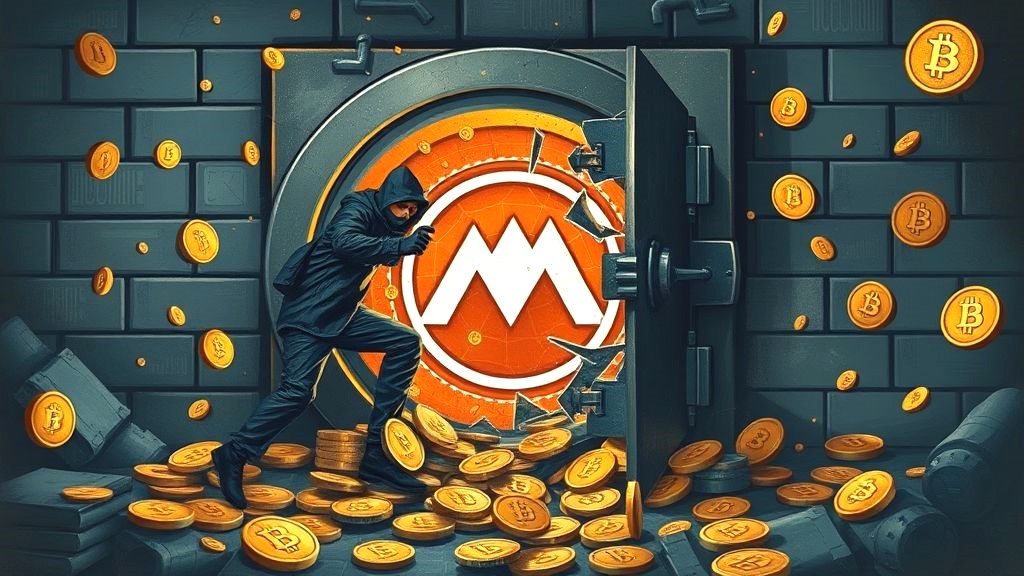
In February 2014, Mt. Gox abruptly halted all Bitcoin withdrawals, creating panic.
Trading was suspended shortly after, leaving users in a state of shock and disbelief.
The company cited "technical issues," but the reality was far more severe.
"When the foundations shake, the entire structure is at risk."
- Architectural Principle
Millions of Bitcoins were reported missing, leading to widespread speculation and fear.
The crypto world faced a major crisis, with trust in exchanges severely damaged.
The scale of the loss was staggering.
"When the foundations shake, the entire structure is at risk."
- Architectural Principle
The Aftermath
In 2014, Mt. Gox abruptly shut down, and millions of Bitcoins were reported lost.
Users were shocked and felt betrayed, as their funds vanished overnight. The crypto world was shaken, experiencing a significant crisis of confidence.
Trust in centralized exchanges was damaged, and legal battles ensued as users sought to recover their losses.
"Lessons learned from the past prevent mistakes in the future."
- Wise Saying
Security became a top priority for the industry, leading to improved practices and greater scrutiny.
Mt. Gox remains a cautionary tale.
"Lessons learned from the past prevent mistakes in the future."
- Wise Saying
Conclusion
Mt. Gox demonstrated the risks of unchecked growth and inadequate security measures.
It taught the cryptocurrency world to prioritize transparency, due diligence, and caution.
The loss of billions serves as a stark reminder of the potential consequences of neglecting security and operational integrity in the fast-paced and rapidly evolving cryptocurrency market. Mt Gox emphasizes the importance of robust security practices, regulatory oversight, and responsible management to safeguard user funds and maintain trust in the digital asset ecosystem.